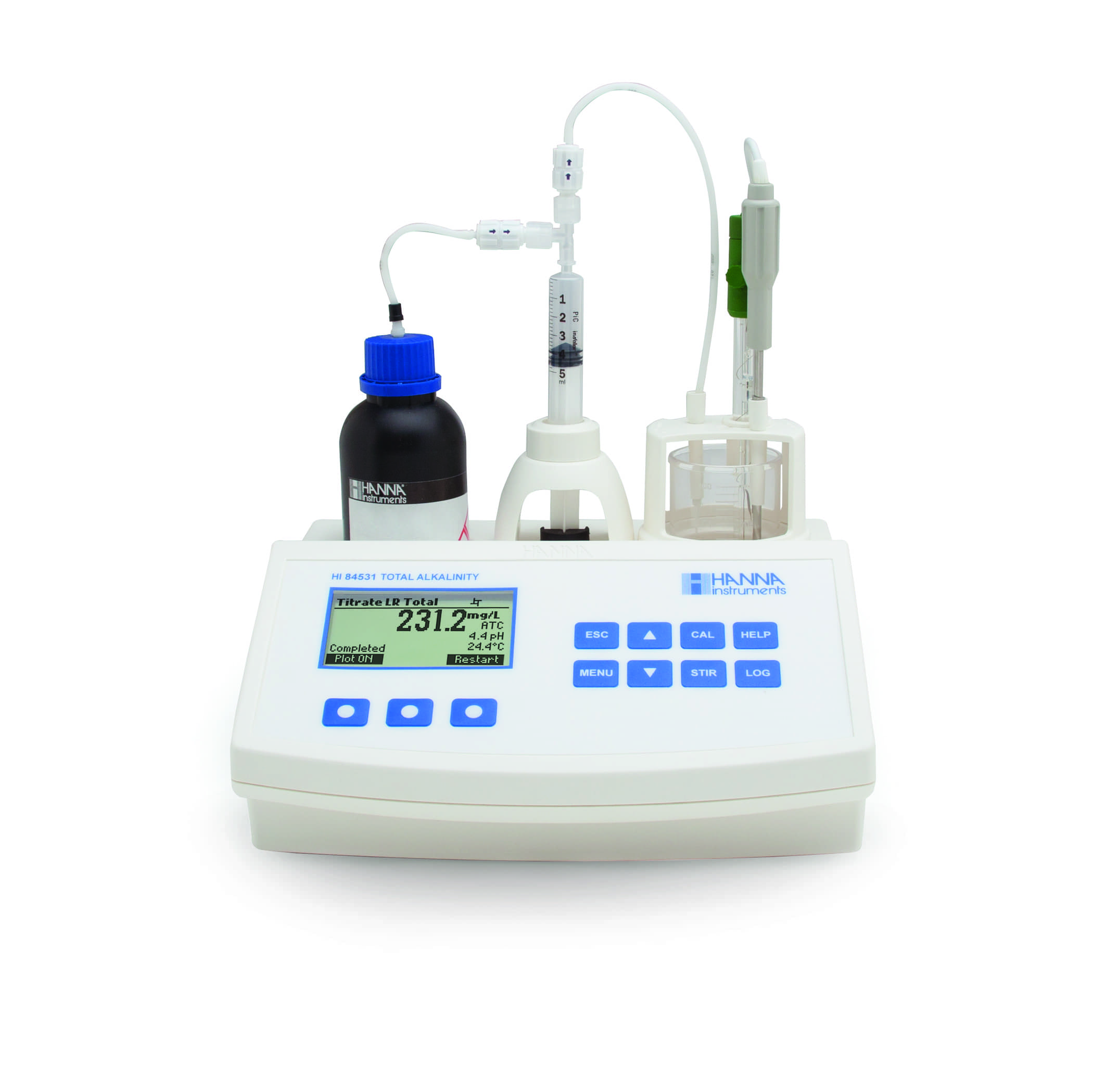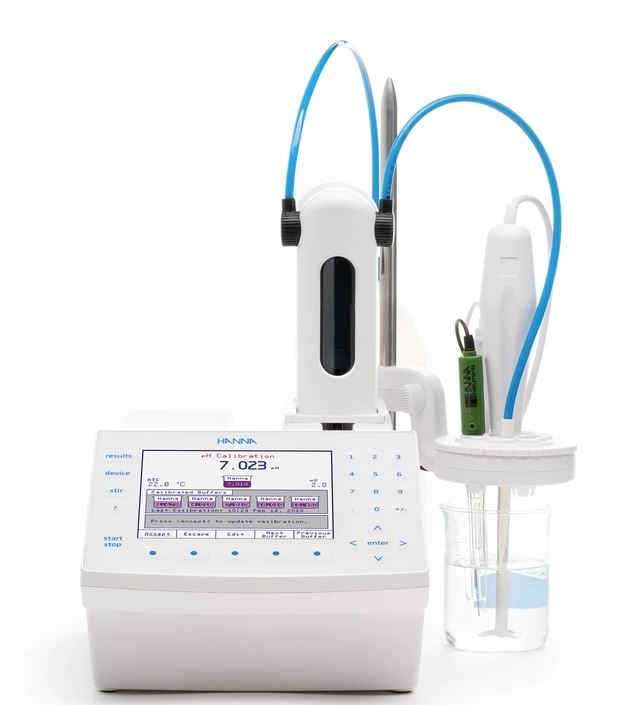
From inflow to outflow, we have everything under control.
Technology that takes your testing beyond the standard.
Wastewater is water used for domestic, industrial, or agricultural activities that, due to human activity, may contain organic or inorganic substances that are potentially harmful to health and the environment. This wastewater must be monitored and treated before being reintroduced into the environment (into the soil, rivers, lakes, or seas) to avoid endangering the normal balance of the ecosystem.
Wastewater discharged into local water supply systems, including sewers, must comply with the wastewater control standards established by the government. It is important to test several parameters to ensure public safety and prevent damage to wastewater treatment processes and the environment.
The main parameter analyzed to assess the content of biodegradable organic matter is COD (chemical oxygen demand), which is often supplemented by BOD (biochemical oxygen demand).
Biochemical oxygen demand. The amount of oxygen required by aerobic microorganisms to absorb and degrade the organic substances present in the wastewater. This value increases with the amount of organic matter present in the wastewater. The measurement of the oxygen present in the measuring cells after five days of incubation yields BOD5, and after 20 days, BOD20.
Chemical Oxygen Demand. This is a metric used to measure the amount of oxygen required to chemically oxidize the oxidizable substances present in wastewater.
Chemical oxygen demand (COD) is an important metric for waste treatment in all sectors, from municipal systems to food production waste streams.
Proper COD testing is important for determining the effectiveness of wastewater treatment and can help diagnose treatment problems. The COD method is also used in power plants, the chemical industry, the paper industry, laundries, environmental studies, and general education. The efficiency of the treatment process is usually expressed as the percentage of oxidizable substances removed during the cycle.
In water treatment plants, the COD value must be less than 10 mg/L O2 at the end of the treatment cycle.
In general, the pH of the water discharged from wastewater treatment plants can vary. The goal is to maintain a neutral pH, i.e., around 7. Depending on the composition of the industrial wastewater, the effluent pH can be high or low. Since the pH of industrial wastewater fluctuates greatly, it must be properly adjusted before it enters the biochemical tank or is discharged. For example, if the wastewater is highly acidic, a base must be added to adjust the pH.
Dissolved oxygen (DO) is a relative measure of the amount of oxygen (O2) dissolved in water. Oxygen levels must be considered and maintained in a wastewater treatment plant. A level of approximately 2 mg/L should be sufficient for biological processes. Bacteria and microorganisms utilize dissolved oxygen to decompose organic matter, thereby reducing the oxygen concentration. During wastewater treatment, microorganisms are added in flocs to aerobically digest and remove organic matter. Consequently, effective treatment depends on the health of the microorganisms and the dissolved oxygen concentration.
Electrical conductivity testing is essential in wastewater monitoring because it relates to the quantification of total dissolved solids in the water. The conductivity (or specific conductivity) of an electrolyte solution is a measure of its ability to conduct electricity. The SI unit of conductivity is siemens per meter (S/m). EC can be used to randomly check and evaluate the performance of water purification systems, so any deviation from the trend may indicate contamination or a leak in the sewer system. It is linked to TDS via a correlation factor.
Is a measure of the amount of all dissolved substances, which can include contaminants, minerals, salts, and other chemicals present in wastewater.
Since TDS measurements are often estimated using electrical conductivity (EC), it is assumed that the dissolved solids are predominantly ionic, with a concentration low enough to result in a linear TDS-EC relationship:
TDS [mg/L] = kₑ × EC [μS/cm]
where:
EC - electrical conductivity of the water at 25°C; and
kₑ - multiplier or conversion factor.
The value of kₑ increases with the increase in the number of ions in the water. It ranges from 0.5 to 0.8, but 0.67 is typically used.
Turbidity is an optical measurement that indicates the presence of suspended particles. It is measured by shining light through a sample and quantifying the concentration of suspended particles. The more particles in a solution, the higher the turbidity. In drinking water and municipal wastewater treatment plants, turbidity is often removed using a combination of sand filtration, settling tanks, and clarifiers.
(including copper, chromium, iron)
Like other elements, phosphorus is healthy and, in limited amounts, even necessary. However, excessive amounts of phosphorus can cause a type of pollution known as eutrophication. This is a process that leads to the aggressive stimulation of algae and other simple plants. Total phosphorus (TP) is a measure of the total phosphorus found in a sample, regardless of whether it is dissolved or particulate.
Wastewater and sludge contain nitrogen in the form of organic nitrogen, ammonia (NH3) or ammonium (NH4+), nitrate (NO3-), and nitrite (NO2-). During wastewater treatment, urea is converted into ammonia nitrogen. Because ammonia has a high demand for BOD and chlorine, high levels of ammonia in wastewater are undesirable. The process of nitrification is used to convert ammonia into nitrates. Excess nitrogen can excessively stimulate the growth of aquatic plants and algae. Excessive growth of these organisms can, in turn, clog water inlets, consume dissolved oxygen during decomposition, and block light in deeper waters.
(anionic, ionic, and cationic)


COD testing requires digestion, so a heating block for your samples is crucial for accurate and repeatable results. For best results, choose a heating block that offers multiple temperatures so you can also perform other tests, such as total phosphorus. Most heating blocks also have timers, which are critical for maintaining digestion times across multiple runs.
For added safety, look for models that optionally come with a protective shield to cover the heating block in case of an accident.
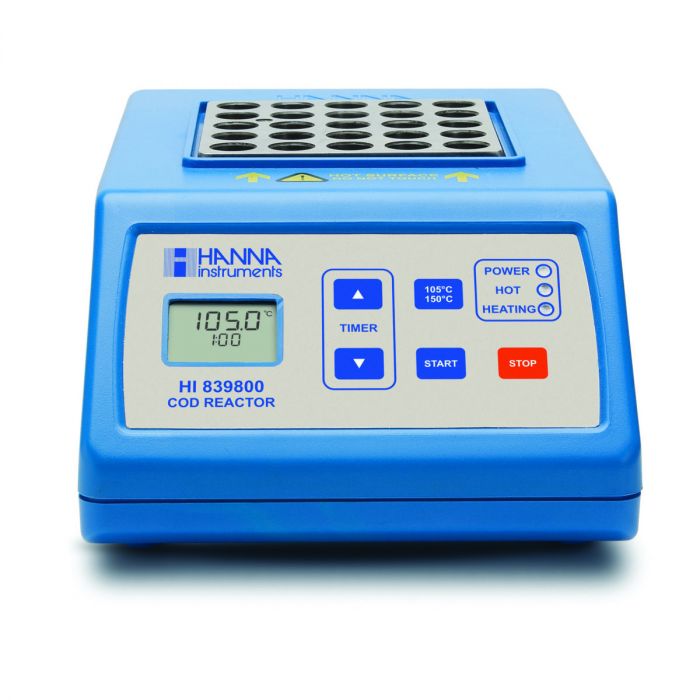
The HI839800 COD Test Tube Heater is an easy-to-use thermoreactor made from durable materials. The aluminum block has a capacity of 25 test tubes and a recess for a reference temperature probe.
The clearly labeled user interface allows for intuitive operation. It features two arrows for setting the integrated timer and a temperature button with two preset temperature settings: 150ºC and 105ºC. Other features include status indicators, a thermal cutout to protect against overheating, and a continuous LCD display.
Das HI97105 ist für die genaue Bestimmung von pH-Wert, Alkalinität, Kalzium, Nitrat, Nitrit und Phosphat in meeresbiologischen Anwendungen konzipiert.
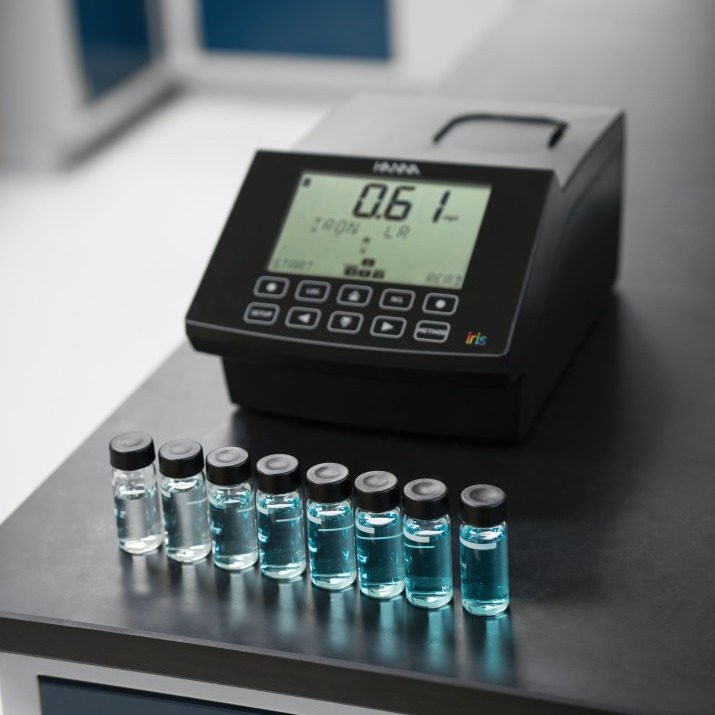
Your partner in perfecting photometric laboratory analyses: the Hanna visible spectrophotometer. Unlike photometers, Iris measures all wavelengths of visible light, not just predefined wavelengths, to ensure complete method compliance and accuracy. The convenience of pre-programmed methods with the ability to expand them. Iris comes pre-programmed with more than 80 commonly used chemical analysis methods to get you started. Update these methods easily by connecting to a computer or flash drive.
Up to 250 methods (standard and user-defined)
Optical system with reference beam technology (slit beam)
For all cuvette types
Memory for up to 9,999 measurements
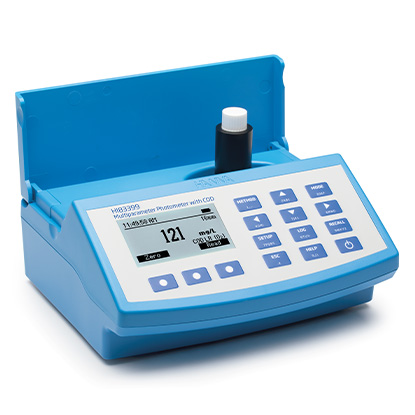
Monitor the levels of biological and chemical nutrients in your wastewater to ensure compliance with regulatory requirements. An innovative optical design ensures measurement consistency. To save valuable bench space, the HI83399, with its digital pH/temperature electrode input, can also be used as a professional pH meter. Specifically designed for the water industry, the HI83399 measures 40 different key quality parameters for water and wastewater.
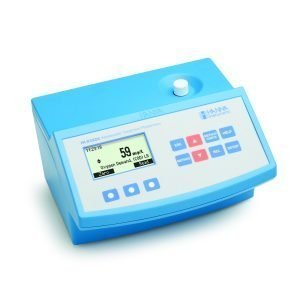
The HI83224 COD Meter and Multiparameter Photometer for measuring chemical oxygen demand (COD) and specific ions combines accuracy and ease of use in an ergonomic benchtop design. This meter is one of the most versatile photometers on the market, offering 15 measurement methods for various parameters, including COD, using ready-to-use liquid or powder reagents. The HI83224 incorporates numerous advanced features, including barcode recognition of sample vials, a graphic LCD display for displaying various chemical forms, and a step-by-step guide mode for inexperienced users.
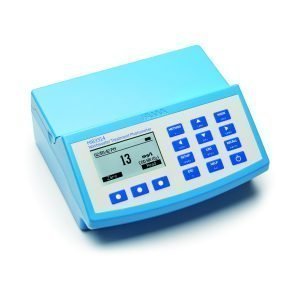
The HI83314 is a compact multi-parameter photometer for measuring key water and wastewater quality parameters. Ten key water and wastewater quality parameters with 20 different methods covering multiple ranges are programmed into the meter. Wastewater treatment degradation parameters include COD, total nitrogen, and total phosphorus, which are important for monitoring nutrient removal. To save valuable bench space, the HI83314 can also be used as a professional pH meter with its digital pH/temperature electrode input.
Reagents are one of the most important components of the COD test system. These chemicals are responsible for the oxidation of organic matter. These COD vials are premixed and ready to use.
Several types of reagents are commercially available:
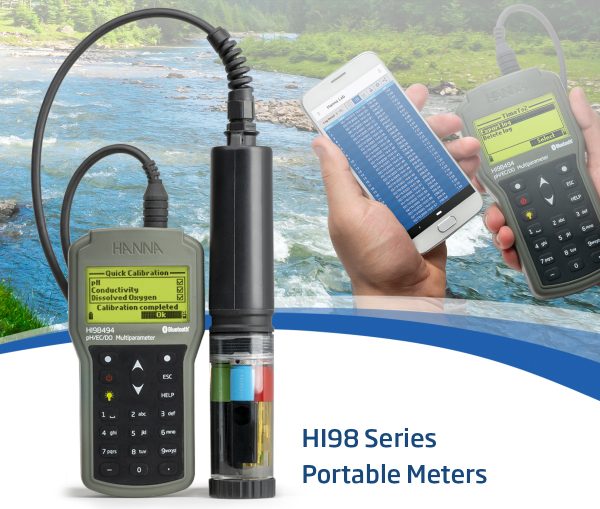
The HI98 series portable meters offer a robust solution for obtaining laboratory-quality results on-site. A wide range of models for single- and multi-parameter measurements means you can find a meter suitable for use in any space.
The HI98198 optical dissolved oxygen meter makes measuring dissolved oxygen concentration a breeze. Optical DO technology requires no minimum flow rate, resulting in less fluctuation in readings. The quick-connect probe is perfect for field or laboratory use. It requires no membranes, no fill solution, and no warm-up time, so you can measure without hesitation.
LDO Luminescence Oximeter
The professional, waterproof HI98193 meter complies with IP67 standards and measures oxygen concentration, barometric pressure, BOD, and temperature. BOD is calculated in mg per liter from the difference between the initial and final dissolved oxygen concentration.
Choose your individual configuration!
The HI9829 is a waterproof, portable multi-parameter meter for monitoring up to 14 different water quality parameters. The microprocessor-controlled multi-sensor probe allows for the measurement of key parameters such as pH, ORP, conductivity, dissolved oxygen, turbidity, and temperature.
Optional connection: ISE Ammonium, ISE Chloride, or ISE Nitrate.
Dissolved Oxygen:
HI7609829-2 DO
pH:
HI7609829-0 pH
HI7609829-1 pH/ORP
ISE:
HI7609829-10 Ammonium ISE
HI7609829-11 Chloride ISE
HI7609829-12 Nitrate ISE
Conductivity:
HI7609829-3 EC
Conductivity and Turbidity:
HI7609829-4 EC/Turbidity
Measurements & Logging Measure up to 12 parameters. Don't lose important data with automatic interval logging of up to 45,000 samples or choose to log-on-demand to store measurement data for key p...
Details: The HI98194 is a waterproof portable logging multiparameter meter that monitors up to 12 different water quality parameters. Its multi-sensor probe allows for the measurement of key parameter...
The HI98195 is a waterproof portable logging multiparameter meter that monitors up to 9 different water quality parameters. Its multi-sensor probe allows for the measurement of key parameters includin...
The HI98196 is a waterproof portable logging multiparameter meter that monitors up to 9 different water quality parameters. Its multi-sensor probe allows for the measurement of key parameters includin...
The HI5000 series meters are perfect for any laboratory and support a wide range of pH electrodes as well as models that enable selective ion, conductivity and dissolved oxygen measurements.
Two channels
Superior design
Advanced features
Customizable interface
Memory for up to 100,000 data points
The HI5222, HI5521 and HI5522 devices also have two channels, so you can measure two parameters simultaneously.
Electrical conductivity should be measured during wastewater treatment so that we can assess which treatment process would be most efficient in removing pollutants and contaminants.
Customizable User Interface The user interface of the HI5321 allows the user to show measurements in various modes: basic measurement with or without GLP information, real-time graphing, and logging d...
The HI98192 is supplied with the HI763133 four-ring conductivity probe with a built-in temperature sensor. This technology allows for accurate readings that cover a complete range with a single sensor...
The HI98713 Precision ISO Turbidity Portable Meter is specially designed for water quality measurements, providing reliable and accurate readings, even within low turbidity ranges. The instrument is b...
The HI88713 Precision ISO Turbidity Benchtop Meter is specially designed for water quality measurements, providing reliable and accurate readings, even within low turbidity ranges. The instrument is b...
Hanna automatic titrators combine advanced performance with unbeatable value.
Automatic Potentiometric Titrators
1. Highest Dosing Accuracy
2. New Interface
3. Innovative Materials
4. Small Footprint
The HI510 is an advanced universal process controller that can be configured for many applications requiring monitoring and/or control of process parameters. It features a digital probe input that automatically detects and updates the controller with the measured parameter. The HI510 offers options for wall, pipe, and panel mounting.
| Cookie | Duration | Description |
|---|---|---|
| cookielawinfo-checbox-analytics | 11 months | This cookie is set by GDPR Cookie Consent plugin. The cookie is used to store the user consent for the cookies in the category "Analytics". |
| cookielawinfo-checbox-functional | 11 months | The cookie is set by GDPR cookie consent to record the user consent for the cookies in the category "Functional". |
| cookielawinfo-checbox-others | 11 months | This cookie is set by GDPR Cookie Consent plugin. The cookie is used to store the user consent for the cookies in the category "Other. |
| cookielawinfo-checkbox-advertisement | 1 year | The cookie is set by GDPR cookie consent to record the user consent for the cookies in the category "Advertisement". |
| cookielawinfo-checkbox-necessary | 11 months | This cookie is set by GDPR Cookie Consent plugin. The cookies is used to store the user consent for the cookies in the category "Necessary". |
| cookielawinfo-checkbox-performance | 11 months | This cookie is set by GDPR Cookie Consent plugin. The cookie is used to store the user consent for the cookies in the category "Performance". |
| viewed_cookie_policy | 11 months | The cookie is set by the GDPR Cookie Consent plugin and is used to store whether or not user has consented to the use of cookies. It does not store any personal data. |
| Cookie | Duration | Description |
|---|---|---|
| stl_script | 3 months | No description |